Maghfira Ramadhani (Afi)
PhD candidate in Economics, Georgia Institute of Technology
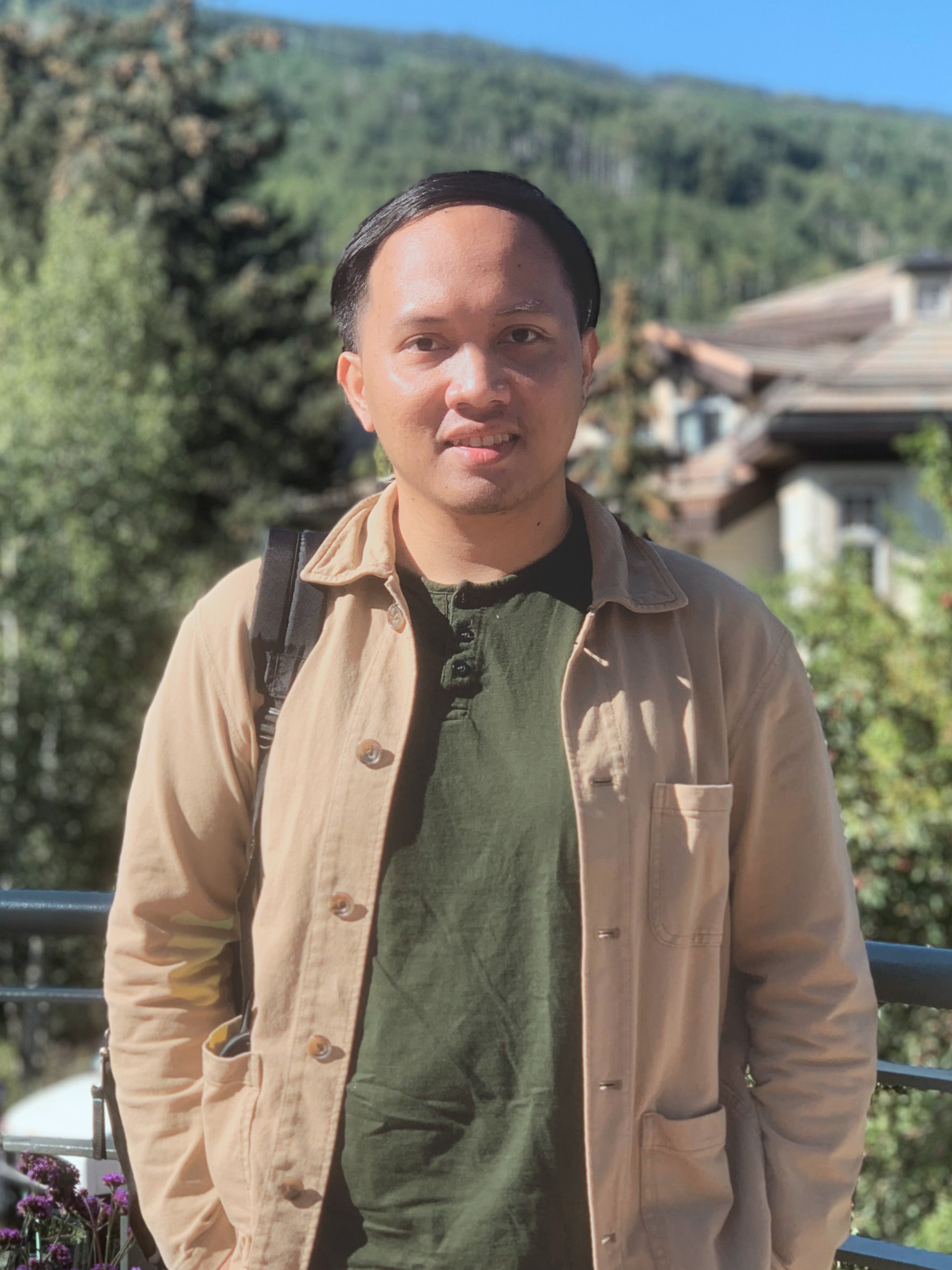
Welcome to my website! I am a PhD candidate at Georgia Institute of Technology, School of Economics.
I will be on the 2026-2027 academic job market.
I am an applied microeconomist interested in policy-relevant issues in energy and environmental economics. My research aims to understand the impacts of climate change, environmental risks, and the energy transition on firm and individual behavior. Using economic theory, econometric methods, and large-scale micro-datasets, I evaluate the roles of policy, technology, and adaptation in addressing these challenges.
My current work examines how emerging technologies and policies reshape market dynamics and consumer behavior. In my job market paper, I estimate how battery storage entry affects the market power of incumbent natural gas generators. I also study (i) how smart thermostat automation improves conservation during grid emergencies, and (ii) how individuals adjust their behavior to avoid pollution using physical activity data from wearable devices.
Before my PhD, I served as an adjunct faculty member at the Institut Teknologi Bandung, teaching energy economics and policy. I concurrently advised the West Java Governor’s Office, the upstream oil and gas regulator, several state-owned energy enterprises, and private companies through a series of consulting projects.
Contact
Email: maghfira.ramadhani@gatech.edu
Office Hours: Sign up here:
Book a time with me
Job Market Paper
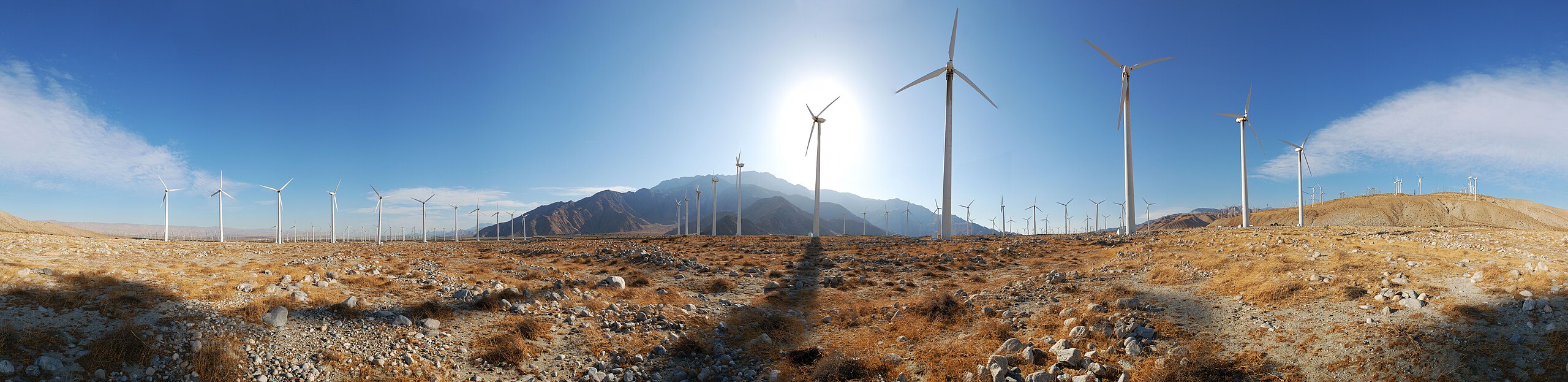
Battery Storage and Natural Gas Generator Market Power
Draft coming soon
Received Best Fourth Year Paper at Georgia Tech
Scheduled for presentation at AEA/ASSA Annual Meeting 2027
Working Papers
Digital Dispatch and Demand Response in Grid Emergencies: Evidence from Household Cooling in California's Flex Alerts
(with Soren Anderson, Dylan Brewer)
Email for draft
Received Best Third Year Paper and CRIDC Award at Georgia Tech
Presented at AEA/ASSA Annual Meeting 2026, AERE@SEA 2025, AERE Summer Conference 2025, AERE@MEA 2025, CRIDC@Georgia Tech 2025, EMEE 2025, CU Environmental and Resource Economics Workshop 2024, SWEEEP@Georgia Tech 2024
Poster (Presented at CRIDC@Georgia Tech 2025)
Publications
Managing Zero-Marginal-Cost, Intermittent Renewable Energy: A Survey of the Engineering, Economic, and Policy Challenges
(with Matthew Oliver, Oliver Chapman, Santiago Grijalva, Daniel Matisoff, and Amanda West)
Renewable and Sustainable Energy Reviews (2026)
National oil companies and fossil fuel subsidy regimes in transition: The case of Indonesia
(with Muhammad Ichsan and Matthew Lockwood)
The Extractive Industries and Society (2022)
Work in Progress
Pollution, Avoidance Behavior, and Health
(with Bobby Harris)
Scheduled for presentation at APPAM 2026. Presented at AERE@SEA 2025, ASHEcon 2025, Atlanta Economics PhD Student Symposium 2025, AERE Summer Conference 2025
Academic Presentations
2027: AEA/ASSA Annual Meeting (Washington, DC)
2026: AEA/ASSA Annual Meeting (Philadelphia, PA), Georgia Tech Energy Day, APPAM Fall Research Conference (Boston, MA)
2025: AERE@SEA (Tampa, FL), Atlanta Economics PhD Student Symposium (Atlanta, GA), AERE Summer Conference (Albuquerque, NM), Georgia Tech CRIDC (Atlanta, GA), Empirical Methods in Energy Economics Workshop (Washington, DC)
2024: Southeastern Workshop on Energy & Environmental Economics & Policy (Atlanta, GA), CU Environmental and Resource Economics Workshop (Vail, CO), Georgia Tech EPICenter (Atlanta, GA)
2022: South East Asia Energy Transition Partnership - Roundtables Executive Training, Australian National University (Virtual)
Teaching
My commitment to teaching is deeply rooted in my personal experience; I have seen firsthand, since my earliest schooling, how great teaching transforms lives, including my own. My teaching experience spans both undergraduate and graduate levels in both the U.S. and Indonesia.
Teaching Experience
- Georgia Institute of Technology
- Graduate Teaching Fellow at the Georgia Tech Center for Teaching and Learning
- Instructor of Record: Statistics for Economists (Fall 2025) [Course Website] [Teaching Evaluation (email for access)]
- Guest Lecturer: PhD Environmental Economics (Spring 2025)
- Head TA:
- PhD Econometrics II (Spring 2026)
- PhD Environmental Economics (Spring 2025)
- Environmental Economics (Spring 2025,2026, Summer 2023,2024)
- International Economics (Spring 2023)
- Math for Economists (Spring 2023,2024)
- Energy Economics (Fall 2023)
- Advanced Microeconomics (Fall 2023)
- Econometric Analysis (Fall 2022)
- Statistics for Economists (Fall 2024)
- Institut Teknologi Bandung
- Instructor: Energy Economics (2017-2022)
- Head TA:
- Master-level Energy Policy (2017-2022)
- Optimization & Operations Research (2017)
Miscellaneous
Website: This website is adapted from Gautam Rao’s website, which is publicly available on his Github.